✨ Getting to know the wonderful Continuous Delivery Community
Name: Jason McIntosh
Pronouns: he/him
Location: Missouri, USA
Who are you?
I’m an eclectic mix of interests and worldviews. VERY science/fact focused. I like history (lately military history), tractors, steam engines, computers, books, scuba diving, flying airplanes, hiking, reading, video games, etc! There isn’t much that doesn’t interest me in the world. I think Heinlein was very right that technology greatly improves human life and survival.
Your hobbies?
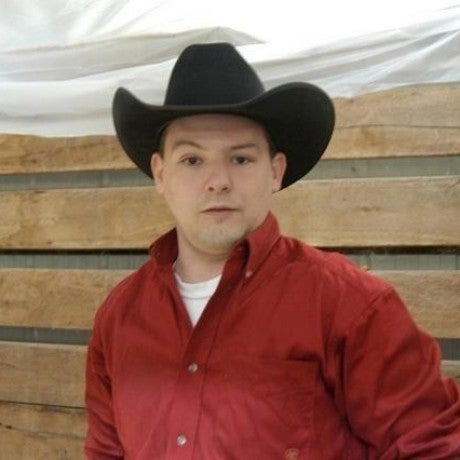
I have a small “farm” in the middle of nowhere. With 4 kids running around and trying to take care of this, life is kinda crazy. My hobbies include everything from woodworking (I built all my own bookshelves), playing with my homelab to scuba diving, airplanes, military history, science of any kind, and more. I try to take a few trips every year to get away. It’s more what hobbies I DON’T have than DO have, as I tend to move from hobby to hobby. I had a HAM radio license I’m currently looking to pick back up, and would love someday to get my pilots license (cost is an issue there). Probably the most time I spend is actually in my home lab where I experiment with different things.
What did you want to be when you were a kid?
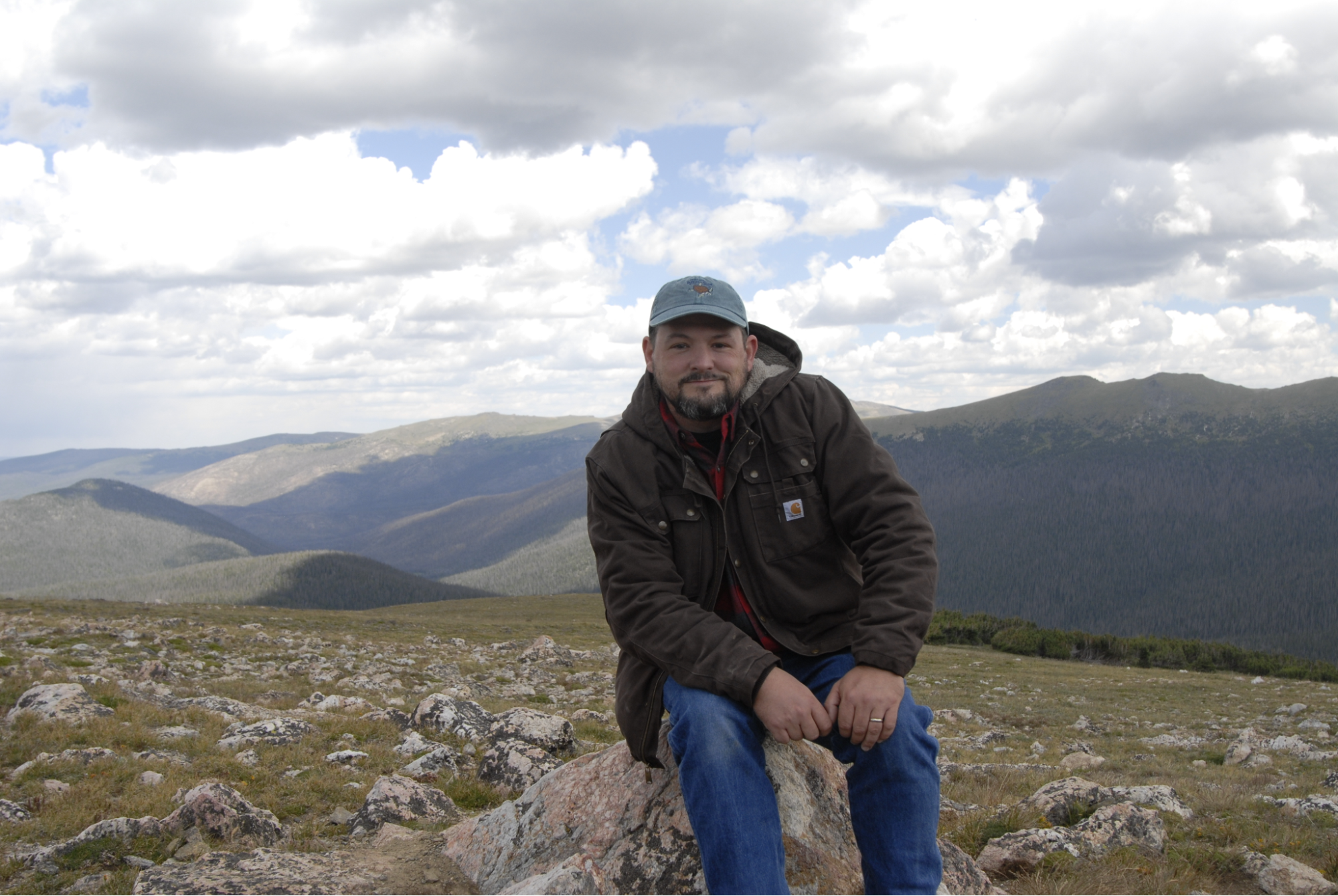
I grew up in a military family. I recall how “glamorous” the pilots were, and everyone wanted to be one. I was SUPER interested mostly because that was the path to being an astronaut in most cases. But I also had interests in a few other areas – primarily physics and chemistry. My dad was into everything, and so I got a lot of my interests through his activities. With the travel for the military plus his background, I was exposed to a LOT of options.
Socially, I did NOT fit in well, and I tended to go towards “geek” or “nerd” areas of interest (was this a cause or effect – nerd areas because I was socially awkward… or because I was socially awkward I went to nerd areas… hmmm). It was about the time I went into middle school and early high school that I focused more into computers. Interestingly enough, I tried to join the military while in college but was told that I was ineligible for active duty.
What led you to a career in tech?
Absolutely my dad. He still tells stories of his time in the air force and stuff he did programming there. Talking programming with him and all that he did got me very interested from an early age. One of my fondest memories was playing ‘GATO’ (a submarine game) on an ancient IBM PC with him. He’s the one who got us our first gaming machine – I started playing games on the Commodore 64. Later, he got me a book on programming, and I wrote a super simple “cave explorer” game from the book. I saw a cursor move on the screen but lost interest fairly quickly in regular games.
It was in high school when I moved much more into tech. I actually started out looking at small engines – repairing lawn mowers and taking apart stuff but shifted over to the programming class the local high school offered due to various reasons I can’t recall now. It was in that first programming class I already realized (due to past exposure) I was far more ahead than most on computers and programming just “clicked” in my head. It was something I knew I could do and enjoy and got into.
A year or two later, I was going full-on Linux. I still recall running Caldera OpenLinux on kernel 1.2.27 (or so) and spending an evening downloading the 2.0 Linux kernel to upgrade. It was… an interesting experience but got me hooked on Linux. The sound of a 9600 kb baud modem (at the time screaming fast) early in the morning using minicom to maintain a connection while I FTP’d the kernel… Well, that was the REAL start.
Do you remember your first open source contribution?
I got exposed HEAVILY to Linux with muds/moos and my first teacher in college. I was looking to run my own MUD server, and he was the traditional “hair down to the waist, systems geek” kinda guy. SUPER sharp and got me more into Linux – we had some great conversations on Linux, C, and stuff in general. That got me INTERESTED, but… it wasn’t until later that I contributed back.
I think the real start was when I was at a new job working full time at the University. I started working on Visual FoxPro doing SQL query work (and later code work… a lot of history here). But I was pushing to go to a real database and more advanced applications. I got authorization from my boss to go “build the next thing”. The push was towards Oracle, which at the time was one of the few supported databases for a core commercial application my department had to support. I remember trying to get Oracle running – I spent a LONG time, and it kept crashing the windows box we were using (Windows NT4).
I was already pushing for Linux, as I had moved my desktop there to Linux with some approvals. So I spent a fair bit of time getting Oracle running on Linux. To my knowledge, I was the first to successfully get this working on Red Hat Linux 7.2 (old old history here referenced what I’d built). I ended up publishing custom GLIBC RPM’s compiled to work around a bug Oracle had on their installations (I recall emailing the GLIBC maintainer pointing out the line… and getting a rather heated response, but thankfully it didn’t put me off of contributing. There were even articles published tagging me and a number of people emailing me referencing my work. I was very much a part of the Missouri Linux Users group at this point and active in OSS and trying to do a lot of things in open source.
How did you get involved in the Continuous Delivery Foundation?
I left the University and went to Carfax. I was doing MINOR things for them in OSS – I had a JNDI/LDAP issue I pushed to Tomcat via an issue, a Guava threading issue, etc. Probably the biggest involvement was an OSS project around observability for RabbitMQ and my general involvement in the RabbitMQ community. It was towards the end of my Carfax career that I was SUPER focused on “continuous delivery” – we’d already built a CD system internally using Gradle to push RPMs for our apps via SSH. But it was all custom. It all ran on hardware, via Jenkins calling Gradle scripts. This “CD” deployed to “pods” before Kubernetes even existed.
What’s interesting is that Kubernetes is almost identical to how we operated. We had (and called them) “pods” before Kubernetes. These were pizza box rack servers all built to be the same. They matched the way k8s operated, and we’d been doing multiple deployments a day consistently. The team had originally pushed to go to AWS, but it wasn’t until towards the end of my tenure there that AWS was really “acceptable”. I was looking at that point for off-the-shelf solutions that would meet needs in a cloud environment and found Spinnaker. I ended up spending a fair bit of time evaluating it, working with the community, and trying to bring it in-house. Though Spinnaker wasn’t adopted, I got an offer from Armory (acquired by Harness) to work on Spinnaker full time. That was how I became involved in the CD Foundation.
What’s your favourite thing to work on?
Anything “self-hosted”. I’m spending a lot of time on the evaluation of various AI models. I’m running qwen3.8:27b on a 3090 card I have and playing with various AI options. I also play a lot in my lab – fiddling with proxmox, Kubernetes, observability, databases, home automation tooling, and, of course, running various CD tooling locally. I actually install almost every CI/CD tool on a regular basis to see how it works. I avoid any Helm chart, operator, or similar tool, as I find they hide too much of how the systems ACTUALLY deploy/operate. We hit this in Spinnaker long ago with halyard – it tried to hide things from users and made it HARDER to deploy/configure Spinnaker. I run everything from opencloud to homebridge to “playground” applications. You can see most of that here. I try to make it all public so people can see what I’m doing and how I do what I do.
Tell us about the thing you’re most proud of and why?
I’m probably most proud of all the people I’ve helped in the Spinnaker community on generic CD concepts. I have done a LOT to both answer questions on tasks not even related to Spinnaker work. Helping people learn tech, get involved, and answering questions is a very fulfilling thing. With the Spinnaker community, it’s been a great project to get people into CD, and, I think it’s been the foundational point for most other CD platforms today.
I will say I love that the marketplace has so many options for continuous delivery – it’s a sign of the interest in the concepts. Spinnaker is very much still alive, actively used, and thriving still – but could use some new attention. What has been interesting is that often – the problems people face ARE NOT with “CD” but still challenges around using things LIKE Kubernetes, security, authorization, etc. It’s really that tech is still so complicated today that it’s often hard for people to understand – and wrappers/abstractions I think, make it even harder. Being able to help someone understand and make better use of tech, or help get to that “ohhhh that makes sense” moment has been a big driver for me.
What is the best connection you’ve made through open source?
This is a tough one, and I am not going to name any particular names. What I will say is the community I interact with – both in observability space, to how many companies are trying to solve CD, to a car auction company dev I worked with, just hammering out ideas on an issue they hit are part of the amazing connections I’ve formed. These are the conversations and “enjoyment” that I think we miss in today’s “AI fast-paced” world. These are why many of us got involved – having fun solving problems, thinking of ideas, dreaming of where we can go, and making things work better and faster. That “geek interaction” is a key part of things that we cannot lose!
What is your #1 tip for getting involved in the community?
ASK questions. DO NOT be afraid. Don’t worry about “I only know Golang” on a Java project. Beginners are absolutely welcome, and we’ll try to help. That’s how new hats become old hats. Join a Slack, talk to people, get opinions, ask why, where, what, when, how. Then TRY things. NEVER be afraid to try something and say “this is bad” – that’s how bad things get BETTER. I will say … be prepared to be a touch “flameproof” – there’s a LOT of “grumpy” types out there (me at times included), and sometimes we respond with emotion… and struggle to remember we’re ALL human.
What’s your favourite open source conference?
This is a TOUGH one. I’ve liked several of the CD Foundation events, but if I had to pick, it’s the smaller local “Linux user group meetings” that you go to. It’s been a while actually since I’ve been to one – have to go to one soonish.
Anything else?
I’ll say that, though I’m still part of Spinnaker and help drive it, it’s not the only thing out there. You should constantly evaluate your toolset. I prefer Spinnaker over ArgoCD (not argoRollouts – two separate things), for example (cloud platform management in particular), but I ALSO constantly try new tools. Full disclosure: I now work for Harness, which has a lot of the same concepts/solutions and, of course, its own features, but every solution is different! The key is solving your problems in a way that you enjoy and makes your (team/company/personal) life better.
Last note – AI is making this crazy tech world go FASTER, not slower, but DO NOT lose the human interactions, the people you work with, the friendships, etc…. and be patient! It’s been a rough world lately – I struggle daily, sometimes wondering where we’ll end up, how things’ll fit over the next few years, but I still have hope for the future… that eventually all of this will lead us to a better world! As much as there is dark, there is a LOT of light in the world!
Where can people find you?
LinkedIn – definitely there, but I’m very active in the Spinnaker Slack, as well as in CD Foundation, and my GitHub, of course.
More from Jason
He’s been making significant contributions in Spinnaker. Check out the latest releases and the roadmap for more information!